
How to Build a Textile Waste Recycling Line
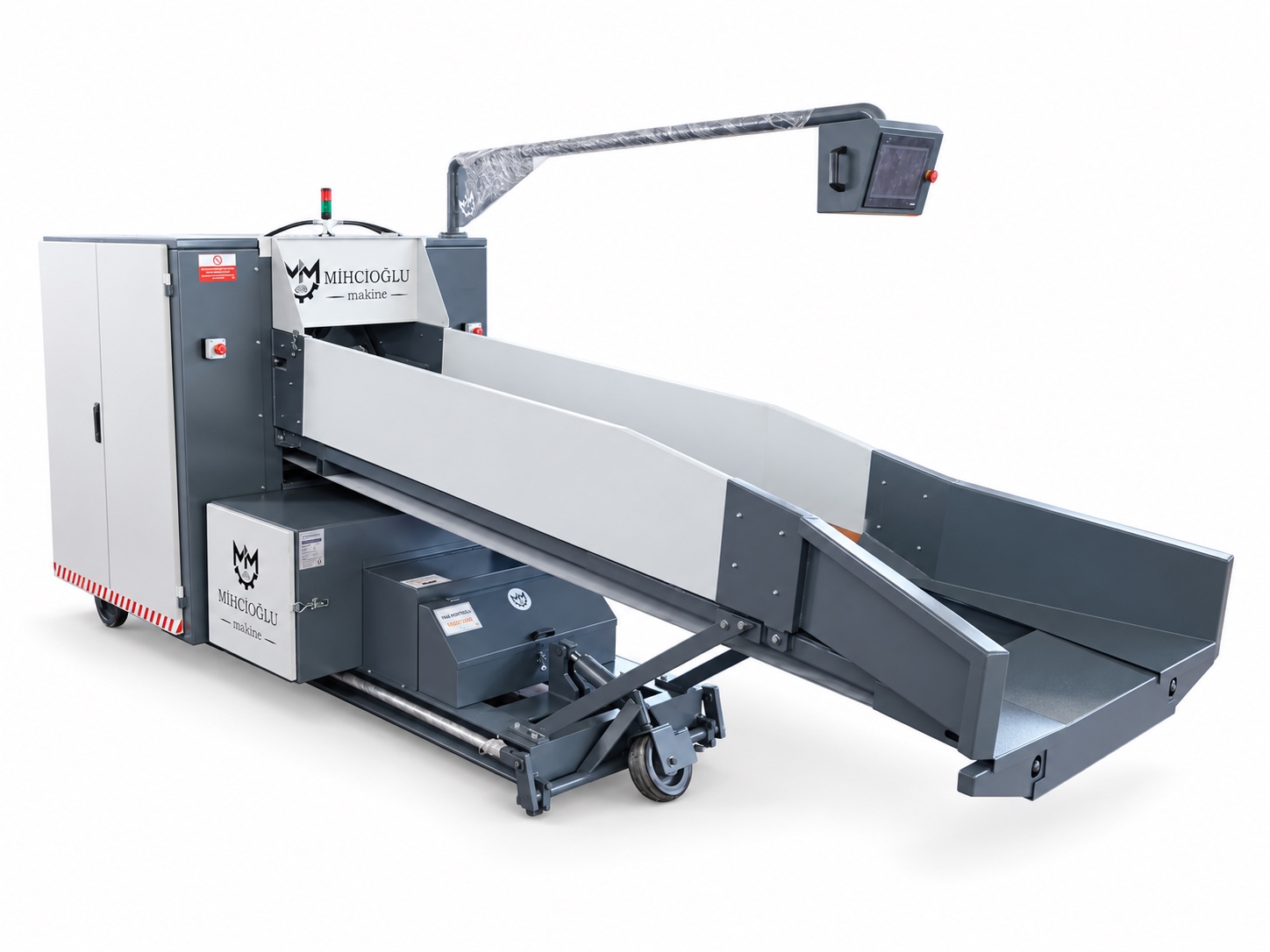
A textile recycling line is an engineering system rather than a single machine purchase. Equipment can become a bottleneck if the input form, target output, capacity and layout are not defined first.
Cutting sits at the centre, while feeding, metal control, transfer and knife maintenance form the same performance chain.
1. Define the material
Record bale density, piece size, moisture, oil and metal contamination for each representative sample. Include changeover and cleaning needs when processing several materials.
2. Set output and capacity
Choose cut length from the requirements of the next opening or shredding machine. Calculate capacity with net operating time after cleaning, maintenance and changeovers.
3. Size equipment as one line
The slowest point determines total output. Conveyor speed, width and buffers must match the cutter cycle.
- MCT50 or MCT60 cutter
- MCB-800 transfer conveyor
- MDB-700 metal detector conveyor
- MBS-800 in-house knife sharpening
- Dust control and guarding where required
4. Complete layout and operating plan
Show material direction, forklift routes, operator access, electrical panels and service areas. Validate cut length, capacity and safety during sample and factory acceptance tests.
Project support: Explore line equipment and request a technical review.